TL;DR: The Executive Summary
For those who want the specs without the scroll.
- The Gist: Blazy Susan is famous for "Pink Papers," but the engineering is French. They utilize ultra-thin wood pulp rather than the standard hemp or rice blends found in most Canadian dispensaries.
- The Material: Wood pulp offers higher structural integrity than hemp. This means the cones are more rigid, easier to fill, and less likely to collapse during packing.
- The Safety: The signature pink and purple color comes from plant-based dyes infused into the pulp. They are flavor-neutral, vegan, and produce a clean, light-gray ash.
- The Economics: Buying the 50-Count Jar reduces your cost per unit by approximately 30% compared to buying standard 6-packs ($0.58/cone vs $0.83/cone).
- The Verdict: Not just a novelty. A legitimate, high-performance pre-rolled cone that happens to be pink.

Shop our Blazy Susan collection
Shop with confidence thanks to our price match guarantee, hassle-free returns, and warranty coverage up to one year. Plus, get free shipping on all orders over $49.
Table of Contents
- What is Blazy Susan?
- Pink vs. Purple vs. Unbleached
- Blazy Susan Cone Size Chart
- Blazy Susan vs. RAW, Elements & OCB
- Are Blazy Susan Papers Safe?
- Packs vs. The 50-Count Jar
- Conclusion
- FAQ
Introduction: What is Blazy Susan?
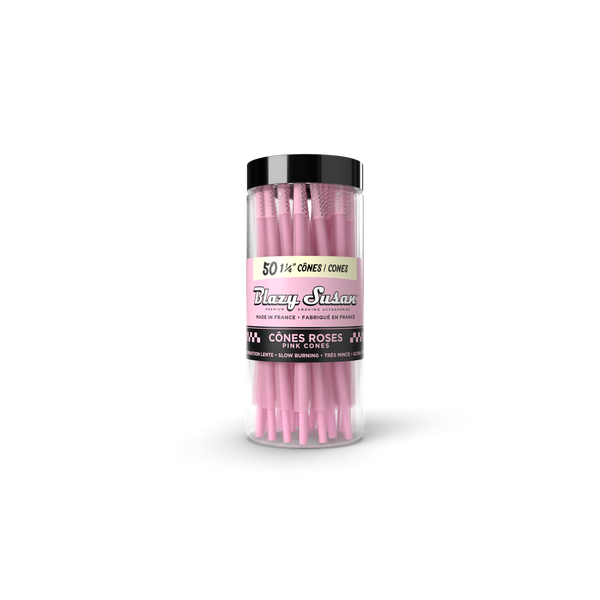
Blazy Susan didn't just enter the market; they painted it pink. Founded in Denver, they broke the monotony of unbleached beige and stark white by dropping the industry's first pink rolling papers. It was loud, it was distinct, and it got everyone's attention.
But for the serious Canadian consumer, "loud" is usually a red flag. We've all been burned (literally) by novelty papers that look great on Instagram but taste like chalk and run faster than a bad seamless update.
So, let's address the skepticism head-on. Is Blazy Susan just a pretty face, or is there actual engineering behind the dye?
French Engineering, Denver Attitude
The branding might be American, but the hardware is strictly European. Blazy Susan cones are manufactured in France. This is the same region that has dominated premium paper production for centuries.
While the current market is obsessed with hemp and rice blends, Blazy Susan zig-zagged. They use ultra-thin wood pulp. This isn't a cost-saving measure; it's a tactile choice. Wood pulp offers a specific structural integrity that hemp often lacks. And that signature Pink (or Purple)? It's achieved with plant-based pigments, not synthetic nastiness.
Pink vs. Purple vs. Unbleached Blazy Susan: Do Colored Papers Taste Bad?
The biggest hurdle for the uninitiated is the fear of flavor. Historically, colored rolling papers have been the scourge of the connoisseur. They are often thick, chalky, and taste faintly of art supplies. It raises valid concerns. Will the purple dye mute your terpene profile? Does the pink paper burn faster than the standard beige?
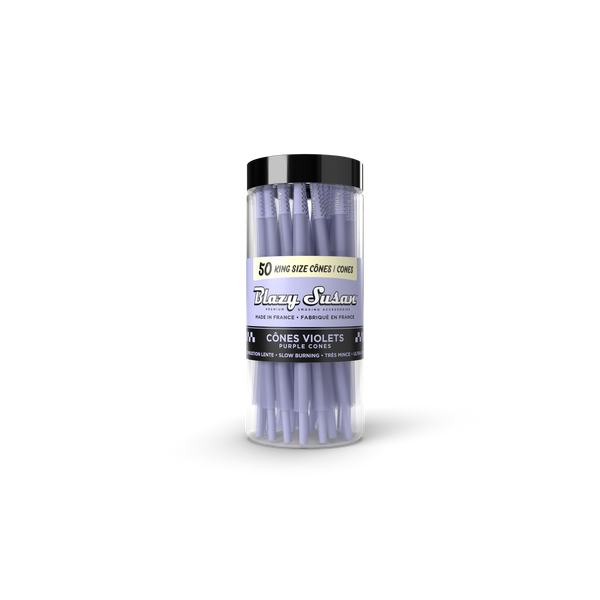
The Reality: If you were to use these products blindly, you would be statistically unable to distinguish between the Pink, Purple, or Unbleached variants. The burn rate, the flavor neutrality, and the ash color are indistinguishable.
- Pink & Purple (Same Engine, Different Paint): These two options are mechanically identical. They are built on the exact same premium French wood pulp chassis. The key difference between Blazy Susan and "gas station novelties" is the integration of the dye. The pulp is pigmented during the production process using food-grade, plant-based dyes. It isn't surface-coated or printed on afterwards. This means there is no heavy chemical layer to burn through, resulting in zero flavor transfer.
- Unbleached (The Control Group): For the skeptics who refuse to smoke anything that isn't brown, the Unbleached line is your baseline. It features the same ultra-thin wood pulp construction but omits the pigmentation entirely. Consider this the "control group" of the lineup. It proves that the slow, even burn is a result of the high-quality pulp engineering, not the additives.
The Definitive Blazy Susan Cone Size Chart
Selecting the correct cone size is not about ambition. It is about airflow dynamics. A mismatch here ruins the experience regardless of the paper quality.
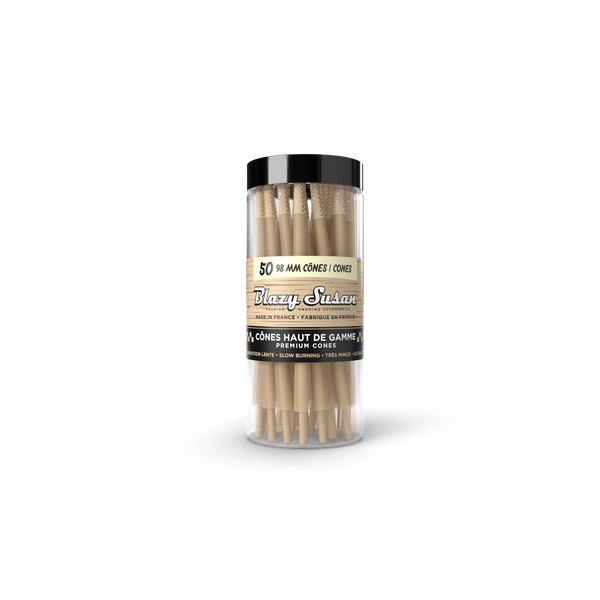
If you underfill a King Size, you create an "air pocket" effect. You end up smoking excess paper and hot air. It creates a harsh, fast-burning draw that wastes your material. On the flip side, overstuffing a smaller cone is just as bad. You compress the material too tightly. This restricts the airflow, leads to uneven running, and often results in a clogged filter halfway through.
We are removing the guesswork. Below are the technical specifications for every standard Blazy Susan size.
| Size | Length | Capacity | Comparison | Best For... |
|---|---|---|---|---|
| Shorty | 53mm | 0.5g | Half a standard pen | Personal / Quick Sessions |
| 1 1/4 | 84mm | 0.75g | A standard cigarette | Everyday Standard Use |
| 98mm | 98mm | 1.0g | The "Slim" / 100s | Longer, Slower Burn |
| King Size | 109mm | 1.1g+ | A Sharpie Marker | Group / Shared Capacity |
| Queen Size (Rose) | 109mm | 1.1g+ | Premium Floral Wrap | Special Occasions |
Note: Actual capacity depends heavily on moisture content and grind consistency.
Battle of the Brands: Blazy Susan vs. RAW, Elements & OCB
Check the forums. The debate is always the same. Can a "pink paper" actually compete with the legacy giants? This comparison isn't about brand loyalty. It is about material science.
Wood pulp, hemp, rice, and bamboo are distinct substrates. They behave differently under heat. They roll differently in the fingers. Each one has a unique friction coefficient and burn temperature.
| Feature | Blazy Susan | RAW | Elements | OCB Bamboo |
|---|---|---|---|---|
| Material | Wood Pulp (France) | Unbleached Hemp | Rice Paper | Bamboo Fiber |
| Burn Speed | Slow | Slow | Ultra-Slow | Medium-Slow |
| Handling | High Grip (Easier) | Medium (Slick) | Low (Slippery) | Medium |
| Taste Profile | Neutral / Air | Earthy / Hemp | Clean / Ash-free | Woody / Sweet |
| Best For... | Ease of Use | Flavor Purists | Indoor / Clean | Eco-Conscious |
The Breakdown
-
Blazy Susan vs. RAW (Wood Pulp vs. Hemp): The main differentiator here is texture. RAW is iconic, but hemp fibers are notoriously slick. This often makes the cones difficult to pack without crumpling the walls. Blazy Susan uses wood pulp to provide a tactile "grip" and higher tensile strength. The two brands are also unrelated companies, despite how often they get grouped together.
- Verdict: If you need structure and ease of packing, Blazy Susan wins.
-
Blazy Susan vs. Elements (Pulp vs. Rice): Elements rely on rice paper, famous for producing zero ash but notoriously fragile and slippery.
- Verdict: Elements are for the surgical roller indoors. Blazy Susans are durable enough for the real world.
-
Blazy Susan vs. OCB Bamboo (Pulp vs. Bamboo): Bamboo tends to burn hotter and faster than wood pulp. It also carries a distinct "woody" flavor profile.
- Verdict: French wood pulp remains neutral. Bamboo adds a flavor note.
Safety Analysis: Are Blazy Susan Papers Safe? (Ingredients & Dye)
"Are Blazy Susan papers safe?" It is the most common search query for the brand. And frankly, that skepticism is healthy. When you see bright pink or purple paper, your brain naturally flags it as artificial. However, a technical analysis of the manufacturing process reveals a massive gap between cheap novelty papers and premium colored papers.
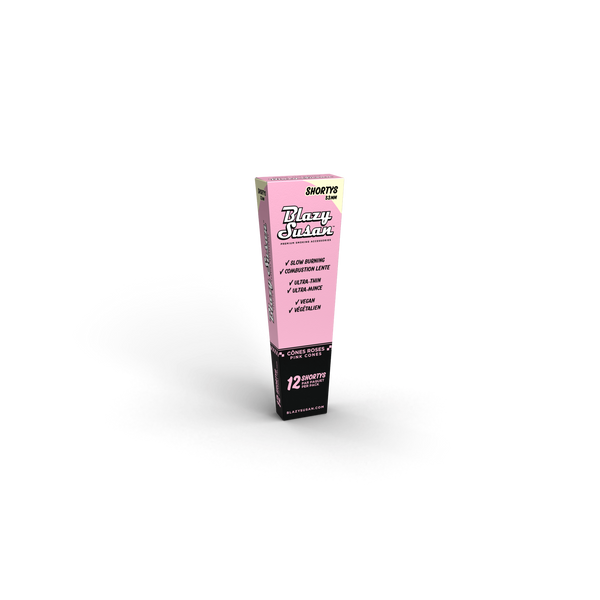
What Blazy Susan Papers Are Made Of
The full ingredient list is short. The paper is ultra-thin wood pulp milled in France. The color comes from food-grade, plant-based dyes added during the pulping stage. The gum strip is natural acacia. There is no tobacco, no nicotine, and no animal-derived ingredient anywhere in the product, which is why the papers are certified vegan, non-GMO, and gluten-free.
On bleaching: the Pink and Purple papers are not bleached white before dyeing, and the Unbleached line skips pigmentation entirely for anyone who wants the plainest possible option.
The "Ash Test": The Lie Detector
In the paper industry, ash is the primary indicator of purity. Dark, charcoal-black ash typically signals incomplete combustion, often caused by heavy bleaching agents or chalk. We tested the combustion of a Blazy Susan cone alongside a standard budget bleached paper.
- The Result: The Blazy Susan cone produced a consistent, light gray ash.
- The Logic: Light ash indicates proper oxygen flow and the absence of heavy burn accelerators. The paper allows the material inside to burn at its own pace.
Addressing the "Paint" Myth
The most common misconception is that the pink color is "painted" on.
- The Reality: The paper is not surface-coated. The wood pulp is tinted during the pulping process using food-grade, plant-based dyes. Because the dye is infused into the fiber itself, it does not alter the flavor profile or transfer color to your lips.
Counterfeit Warning
If you see horror stories on Reddit about metallic tastes, it is highly probable the user purchased a counterfeit product. Authentic Blazy Susan products undergo rigorous quality control. We recommend purchasing only from authorized stockists to ensure you are receiving the genuine, lab-tested product.
Value Breakdown: Packs vs. The 50-Count Jar
For the occasional smoker, grabbing a single pack is fine. But for the regular user, relying on standard packs is mathematically offensive. You are paying a "convenience tax" every time you restock.
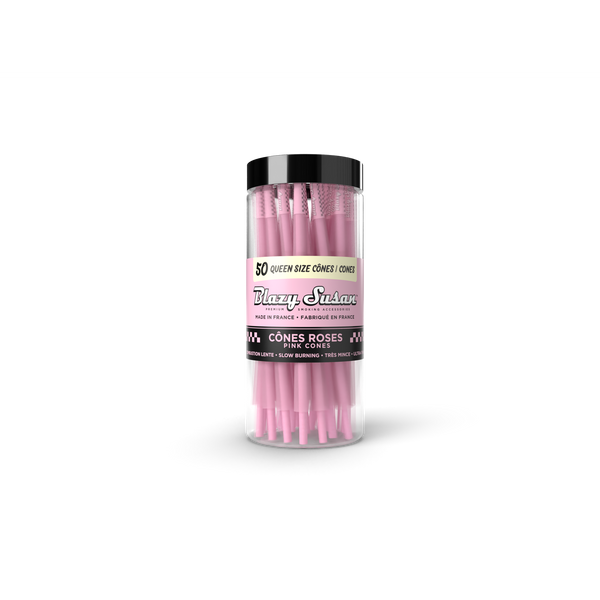
The Economics: Stop Overpaying Per Cone
The math is straightforward. A standard pack of 1 1/4 cones typically retails for $4.99 CAD. With 6 cones per pack, you are paying roughly $0.83 per cone.
- The 50-Count Jar retails for $28.99 CAD.
- The Math: At $28.99 for 50 cones, the cost drops to approximately $0.58 per cone.
- The Savings: A 30% reduction in consumable costs simply by changing your packaging.
Structural Integrity: The "Crush" Factor
Standard paper packs are pliable liabilities. When placed in a pocket, they deform, leading to crushed cones and uneven burns. The Blazy Susan Jar is rigid and airtight, acting as both armor against physical damage and a humidity barrier to keep the paper fresh.
Our Recommendation
- For Best Value: Pink 1 1/4 Cones - 50 Count Jar
- For Personal Efficiency: Pink Shorty Cones - 50 Count Jar
- For Maximum Capacity: Purple King Size Cones - 50 Count Jar
Conclusion
We started this review with skepticism. Usually, products that rely on "visuals" are compensating for a lack of substance. Blazy Susan is the exception.
Shop our Blazy Susan collection
Shop with confidence thanks to our price match guarantee, hassle-free returns, and warranty coverage up to one year. Plus, get free shipping on all orders over $49.
This isn't a novelty item. It is a high-performance tool wrapped in a loud color. By sticking to premium French wood pulp and food-grade dyes, they have created a cone that offers the structural integrity of wood with the clean burn of a premium paper.
Whether you need the efficiency of a Shorty or the capacity of a King Size, the "pink paper" is more than just a statement. It is a reliable choice for your ritual.
Ready to judge the performance yourself? Browse the full collection of Blazy Susan Cones & Jars here.
FAQ: The Questions You Actually Google
The Papers Themselves
Q: What is the difference between pink and purple Blazy Susan?
A: Only the color. Both use the same French wood pulp, the same plant-based dye process, and the same acacia gum. They burn identically and taste identically. Pick whichever you prefer visually.
Q: What are Blazy Susan papers made of? Are they bleached?
A: Ultra-thin wood pulp milled in France, colored with food-grade plant-based dyes infused during the pulping process, and gummed with natural acacia. The pink and purple papers are not bleached white first, and the Unbleached line has no pigment at all.
Q: Does RAW own Blazy Susan?
A: No. Blazy Susan is an independent company founded in Denver, Colorado. RAW is owned by HBI International. The two are unrelated competitors, though both brands source their paper from European mills.
Q: Do the pink papers actually taste like anything?
A: No. The standard Pink, Purple, and Unbleached cones are neutral. The dye is locked into the fiber and does not impart flavor.
Product Quality & Authenticity
Q: I bought Blazy papers and they tasted harsh. Did I get scammed?
A: Probably. Authentic Blazy Susan papers are designed to be tasteless and odorless. If you experience a harsh chemical taste, you likely bought a counterfeit. Always purchase from authorized Canadian retailers.
Q: Where exactly are these made?
A: The paper is milled in France using premium wood pulp. Final assembly happens in facilities in the USA and Indonesia under strict QC.
Troubleshooting & Usage
Q: Why are my cones "Canoeing" (burning unevenly)?
A: It is rarely the paper; it is usually the packing. Because Blazy Susan uses ultra-thin wood pulp, it requires a fluffy grind. The Fix: Don't stuff it all at once. Pack gradually and tap it down to ensure uniform density.
Q: Can I use these to fix sticky flute pads?
A: Oddly specific, but yes. Musicians use un-gummed Blazy papers to clean moisture from sticky instrument keys because the paper is highly absorbent and lint-free.
Rose Wraps & Specifics
Q: Are the Rose Wraps actually organic?
A: Yes. They are made from wood-based papers infused with real floral botanicals. They are tobacco-free and nicotine-free.
Q: Are they Vegan?
A: Yes. The papers, dyes, and gum (acacia) are 100% Vegan, Non-GMO, and Gluten-Free.